Start with names that mean something
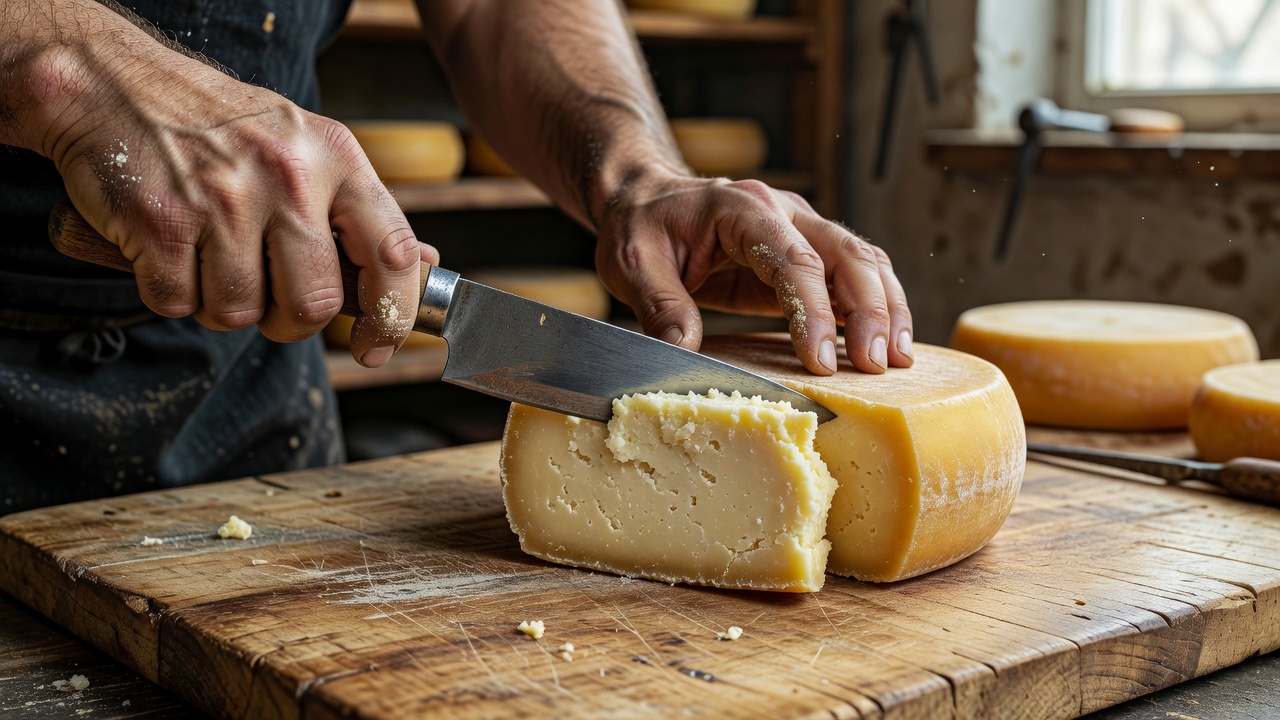
A useful fondue menu identifies the cheeses rather than relying on phrases such as “mountain selection” or “house reserve.” Gruyère AOP, Vacherin Fribourgeois AOP, Beaufort AOP and Abondance AOP describe distinct products with their own production rules. Emmental de Savoie IGP belongs to a different geographical-indication category. Those labels deserve to be read accurately.
AOP is the French abbreviation for a protected designation of origin; IGP refers to a protected geographical indication. Their precise requirements depend on the product specification and jurisdiction. Broadly, they concern a product’s geographical connection and defined production conditions. Neither is a restaurant rating, a guarantee of a particular fondue recipe or proof that every ingredient on the table comes from the same valley.
For context beyond a menu, the Swiss AOP-IGP association and France’s INAO provide starting points. Use official specifications for detailed production claims, especially when comparing raw-milk requirements, seasonal production or permitted geographical areas.
Age adds character, not automatic superiority
Maturation changes a cheese’s moisture, texture and aromatic intensity. A longer-aged cheese can introduce compelling savoury notes, but an entire fondue made from the oldest available cheese is not necessarily the most harmonious. Kitchens may combine ages to balance melting behaviour with depth of flavour. “More mature” and “better suited to this blend” are different judgements.
Ask what the kitchen is trying to achieve. A supple, rounded blend and a more assertive, nutty blend can both be carefully made. The best explanation relates the ingredients to the intended result instead of presenting age as a competition. Accompaniments also matter: acidic pickles, bread and potatoes influence how richness is perceived over a full meal.
The quiet work of a stable emulsion
Fondue brings water, fat and cheese proteins together in a mixture that must remain reasonably uniform. Wine contributes liquid, acidity and aroma. Starch is often used to help stabilise the mixture. Gentle preparation and suitable heat make the difference between a flowing texture and a pot that separates or catches on the base.
At the table, you should not need a technical vocabulary to notice the result. The cheese ought to coat the bread without feeling like a heavy, elastic lump. A vigorous boil, a strong scorched smell or a conspicuous layer of separated oil is worth mentioning to the server. A little variation during a long shared meal is normal; persistent problems should be corrected by staff, not endured politely.
Different preparations need different treatment. A Vacherin Fribourgeois fondue is particularly sensitive to excessive heat. The steady flame appropriate to one blend should not be assumed appropriate to another. Leave adjustments to the restaurant team, especially where a burner contains fuel or has a hot metal housing.
A small ingredient vocabulary
- Caquelon
- The fondue vessel, traditionally often earthenware. Its shape and heat response affect table service, but the name alone does not establish quality.
- Kirsch
- A cherry spirit used in some recipes or served separately. It is not universal, and its presence should be confirmed when alcohol matters.
- Garlic
- Often rubbed around the pot or included in preparation. A subtle amount can support the cheese; diners with restrictions should still ask.
- Starch
- A common stabilising ingredient. Ask which kind is used if you have an allergy or need to avoid a particular grain.
- Moitié-moitié
- A half-and-half blend conventionally pairing Gruyère AOP with Vacherin Fribourgeois AOP, closely associated with Fribourg.
Dietary questions belong before the pot
Fondue contains milk and is unsuitable for someone with a milk allergy unless a genuinely separate, appropriate alternative is provided. A low-lactose cheese does not make the dish safe for a milk allergy. Bread may contain wheat, and kitchen cross-contact is a separate issue from the ingredient list. Confirm both with the venue.
Vegetarian diners should ask about rennet rather than assuming every cheese qualifies. People avoiding alcohol should request a preparation made without it; heating does not reliably remove all alcohol. Pregnancy, immune conditions and other medical considerations require individual advice from a qualified professional. The presence of a hot pot is not a substitute for clear information about milk treatment and safe handling.
These questions do not diminish the occasion. A capable dining room welcomes them early, explains its limits and avoids improvising promises it cannot support. Once the ingredients are clear, the table can return to the more enjoyable task of sharing the meal.