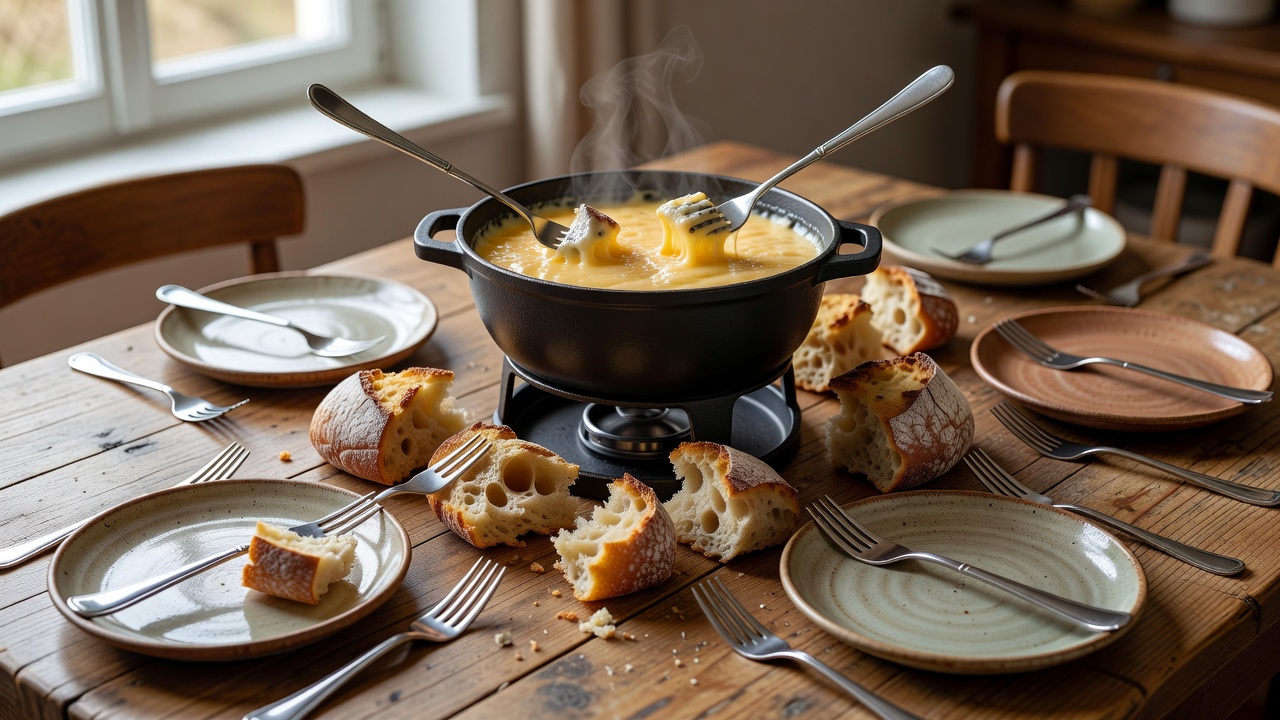
Agree before the first dip
A shared pot begins with a shared decision. Discuss the blend, alcohol, allergies and portion size before ordering. If one diner needs a different preparation, ask whether a separate pot and utensils are possible. Simply removing an accompaniment from a communal table does not resolve ingredient or cross-contact concerns.
Be clear about what the menu price covers and how portions are counted. Some venues describe fondue per person while preparing it for a minimum number of diners. Bread, potatoes or other sides may be included or charged separately. Confirming the arrangement is practical, not inelegant, and helps avoid an awkward conversation at the end.
There is no need to prove enthusiasm by ordering every rich accompaniment. A simple table can be more balanced and easier to manage. Leave room for individual preferences, including diners who would rather choose a different main course. Participation should feel welcoming rather than compulsory.
Give the pot a safe centre
When the fondue arrives, pause while the server positions the heat source and vessel. Keep sleeves, napkins and bags away from the burner. If reaching is difficult, ask for the table to be rearranged instead of leaning across a hot pot. Long forks extend your reach, but they do not make an unstable seating arrangement safe.
Listen to the explanation of stirring and heat. Some preparations benefit from a gentle movement through the cheese; others need especially restrained handling. The familiar advice to stir in a figure of eight is a convention, not a universal technical requirement. The goal is an even texture without splashing or scraping aggressively.
Never adjust unfamiliar fuel equipment yourself. If the pot boils hard, develops a scorched smell or becomes difficult to dip into, ask the team to check it. Mentioning a problem early is kinder to the kitchen and your companions than waiting until the meal has deteriorated.
Use the utensils considerately
Secure a manageable piece of bread on the fondue fork, dip carefully, and let excess cheese settle before bringing it toward your plate. A crust can help the bread hold together. Avoid oversized pieces that are difficult to coat or eat, and give other diners room to enter the pot without crossing forks.
For a hygienic shared table, transfer the food to your plate and use your own eating fork rather than putting the communal dipping utensil in your mouth. If the restaurant provides a different arrangement, ask how it is intended to work. Personal utensils should not be used to retrieve another diner’s lost bread from the pot.
Stories about penalties for dropping bread are playful customs, not obligations. Nobody should be pressured to drink alcohol, pay an invented forfeit or participate in a joke that makes them uncomfortable. The most durable tradition is consideration for the people actually at the table.